Hoof Care Basics: A Weekly Checklist
A simple weekly hoof-care routine every owner can follow to catch problems early and keep every ride comfortable.
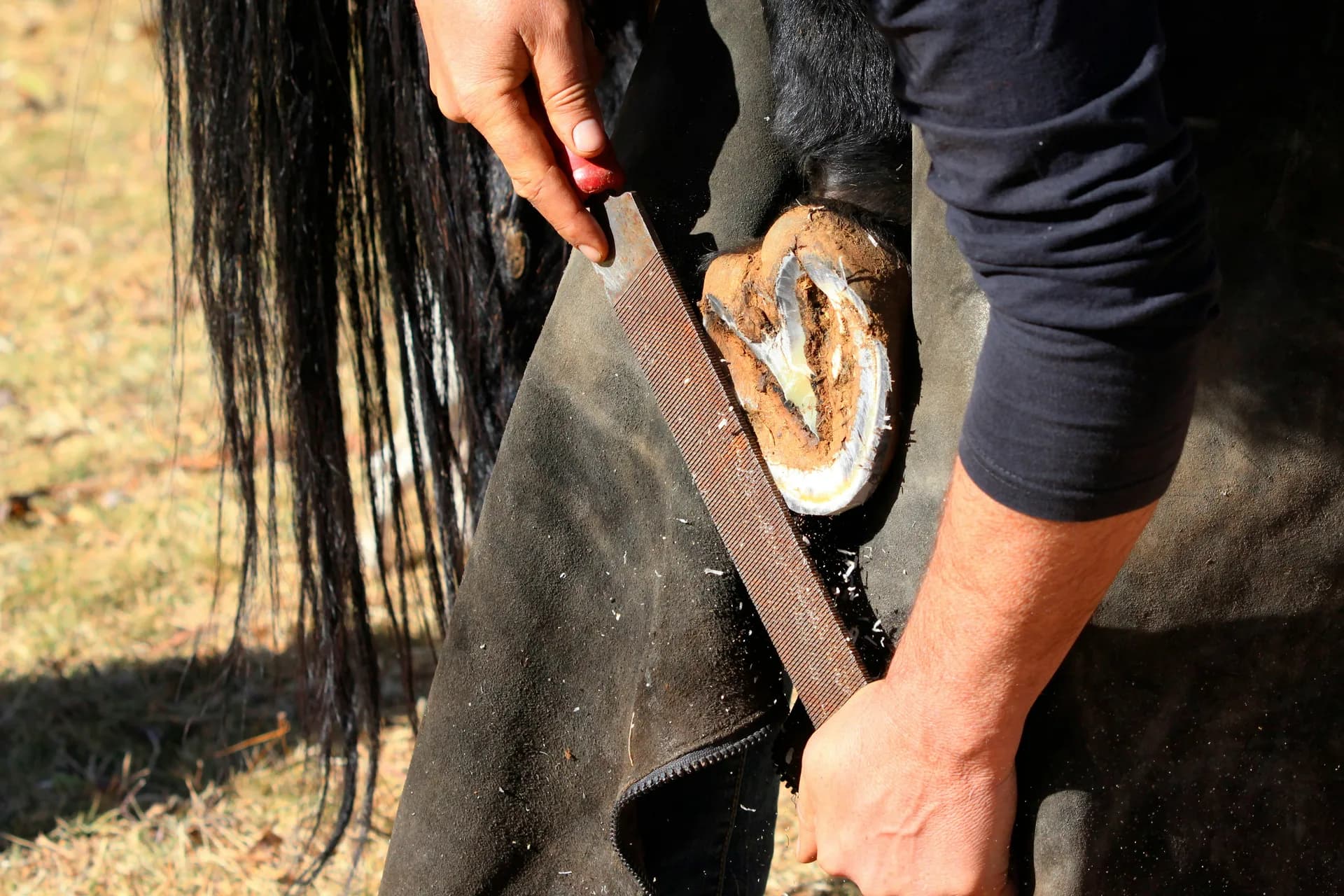
Healthy hooves start with the basics
Hoof care doesn't need to be complicated. Regularly picking out your horse's feet and having a proper look at them can help you notice changes early, rather than discovering something when it has already become a problem.
It only takes a few minutes, and the more often you do it, the better you'll get at knowing what's normal for your horse.
What to check
- Pick out all four feet. Remove dirt, mud and manure, including anything packed around the frog. Check for stones or anything else that shouldn't be there.
- Feel the hooves. Pay attention to their temperature as you handle them. Hoof temperature naturally varies, so a warm hoof on its own doesn't necessarily mean there's a problem. What you're looking for is something noticeably different from what's normal for your horse, particularly if there are other signs of discomfort.
- Check the frog and sole. Look for anything that's changed. Soft or crumbly areas, unusual discharge or a strong smell are worth investigating.
- Look for cracks or damage. Small chips are common and aren't necessarily a problem, particularly in barefoot horses. Keep an eye on cracks that are getting larger, travelling further up the hoof or appear to be causing discomfort.
- Check the legs while you're there. Run your hands down each leg and around the fetlock and coronary band. Feel for any new swelling, heat or sensitivity.
- Get familiar with your horse's digital pulse. It's useful to know how it normally feels so you can recognise a change. A noticeably stronger or bounding digital pulse, particularly alongside heat, pain or lameness, needs attention.
Most of this comes down to knowing your own horse. When you're handling their feet regularly, changes tend to stand out.
Don't wait for the next farrier visit
Your farrier might only see your horse every few weeks, so problems can develop between visits.
If your horse suddenly becomes lame or uncomfortable, you find a significant crack or injury, or there's unusual heat together with a strong or bounding digital pulse, don't wait for the next scheduled trim or shoeing.
Call your farrier and explain what you've found. They can advise whether it's something they need to look at or whether your vet should be involved.
Some hoof problems need veterinary attention straight away. Sudden or significant lameness, signs that could indicate laminitis, or a nail or other object penetrating the hoof are reasons to contact your vet promptly. If something is stuck in the hoof, don't pull it out before speaking to your vet, its position and depth can be important when assessing the injury.
Regular farrier visits are an important part of hoof care, but there's plenty you can keep an eye on in between. Picking out your horse's feet regularly gives you a chance to find problems and, just as importantly, learn what their feet normally look and feel like.